Synthesis of 1,3-Dideoxy-2,5-nondiulose Derivatives by Highly Stereocontrolled Alkylation of Protected Diacetone Hexulose Aldehydes
Isidoro Izquierdo Cubero* , María T. Plaza
López-Espinosa, Rafael Robles Díaz, Antonio J. Mota Ávila and Francisco Franco
Montalbán
Department of Organic Chemistry, Faculty of Pharmacy,
University of Granada, 18071 Granada (Spain).
*Comments about this
contribution should be addressed to: [email protected]
Received: 20 August 2001 / Uploaded 21 August 2001
Introduction
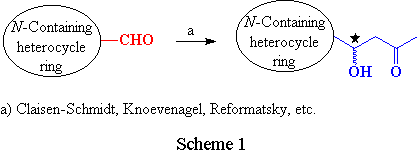
In connection with other works dealing with the stereoselective synthesis of bioactive compounds, and according to Scheme1, we were interested in the transformation of a formyl group belonging to complex protected polyhydroxylated pyperidine or pyprrolidine (azasugar) into an 1-hydroxy-3-oxobutyl appendage. With this aim, different synthetic strategies were envisaged, where the Claisen-Schmidt and other related reactions (Knoevenagel, Reformatsky, etc.) could be used, but under the condition that the new stereogenic centre (starred carbon) must be created in a highly stereocontrolled manner, so the necessity of models for carrying out a such modification.
With the above objective in mind, the influence of the chirality, as well as the ring size, of the starting aldehyde on the stereochemical course of the process must be investigated, and thus two readily available "diacetone hexulose aldehyde", namely 2,3:4,5-di-O-isopropylidene-b -d-arabino-hexos-2-ulopyranose (2) and 2,3:4,6-di-O-isopropylidene-a -l-xylo-hexos-2-ulofuranose (7), were chosen as models.
The Claisen-Schmidt Reaction between an aldehyde without a -hydrogen with a ketone under basic conditions, is a well-established procedure for the synthesis of b -hydroxyketones. When the reaction is conducted under the presence of aldolases[1], as chiral basic catalyst, a high stereoselectivity is observed. Recently[2] it has been reported that small basic chiral molecules, such as l- and d-proline, can act as "mimics" of those enzymes giving high regio, stereo and enantioselectivities. Although this procedure has been applied to an acyclic simple carbohydrate derivative (2,3-O-isopropylidene-d-glyceraldehyde),[2c] to the best of our knowledge, references about its use with more complex ones, such as those above mentioned 2 and 7, have not been found in the literature, and in this context we report herein the obtained results by application of this methodology to such compounds.
On the other hand, the Knoevenagel as well as the Reformatsky Reaction could lead to the already mentioned b-hydrocabonyl compounds, and though both reactions have been previously applied in the carbohydrates field by our group[3], and recently by others[4], a comparative study of these reaction in the case of 2 and 7 has been carried out and the reached results are also included in this communication.
Results and discussion
The results of Claisen-Schmidt condensation reaction between compounds
2 and 7 with acetone catalysed by l-proline (see Scheme 2) are
summarised in Table 1 (entries 1 and 2). In both cases the reaction proceeded
with excellent stereoselectivity, thus 2 afforded
1,3-dideoxy-5,6:7,8-di-O-isopropylidene-b-d-manno-non-2,5-diulo-5,9-pyranose (3)
[(4R)-epimer present in 99.1%], whereas 7 gave
1,3-dideoxy-5,6:7,9-di-O-isopropylidene-a-l-gulo-non-2,5-diulo-5,8-furanose (8)
[(4R)-epimer, present in 93.1%]. In both cases, the (4S)-epimers
were not detected at all. Under these conditions, the corresponding
crotonization processes also proceeded with extremely low yield but high
stereoselectivity to afford the related E-a
,b -enones:
1,3,4-trideoxy-5,6:7,8-di-O-isopropylidene-b-d-arabino-non-3-ene-2,5-diulo-5,9-pyranose
(5) and 1,3,4-trideoxy-5,6:7,9-di-O-isopropylidene-a-l-xylo-non-3-ene-2,5-diulo-5,8-furanose (10).
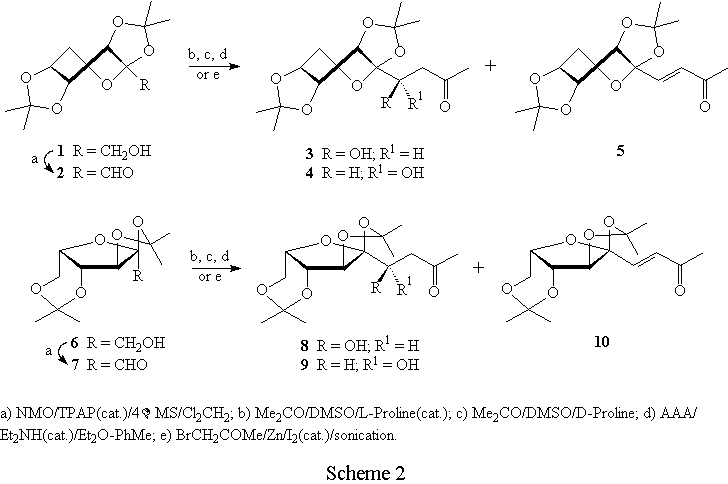
Table 1. Composition of the reaction mixture from GLC analysis
|
|
|
|
|
|
|
|
|
|
|
|
|
|
|
|
|
|
|
|
|
|
|
|
|
|
|
|
|
|
|
|
|
|
|
|
|
|
|
|
|
|
|
|
|
|
|
|
|
|
|
|
|
|
a b-Hydroxyketone; b Catalysed by l-Proline; cCatalysed by d-Proline; dKnoevenagel reaction with AAA in PhMe/Et2O catalysed by Et2NH; eReformatsky reaction with Bromopropanone/Zn catalysed by I2
Compounds 3,4, 8, and 10 were characterised on
the basis of their analytical and spectroscopic data (see Tables 2-3 and Figures
1-2) and chemical correlation. Thus, the 4R configuration of 3 was
determined by comparison of the chemical shifts of C-4 and C-6 with those showed
by the same carbon atoms in 4 and application of the rule established by
Costanzo et al.[4] whose observed an up field shift of @ 2 ppm in the major isomer (R) respect to the minor
(S-isomer), in a series of analogous compounds. 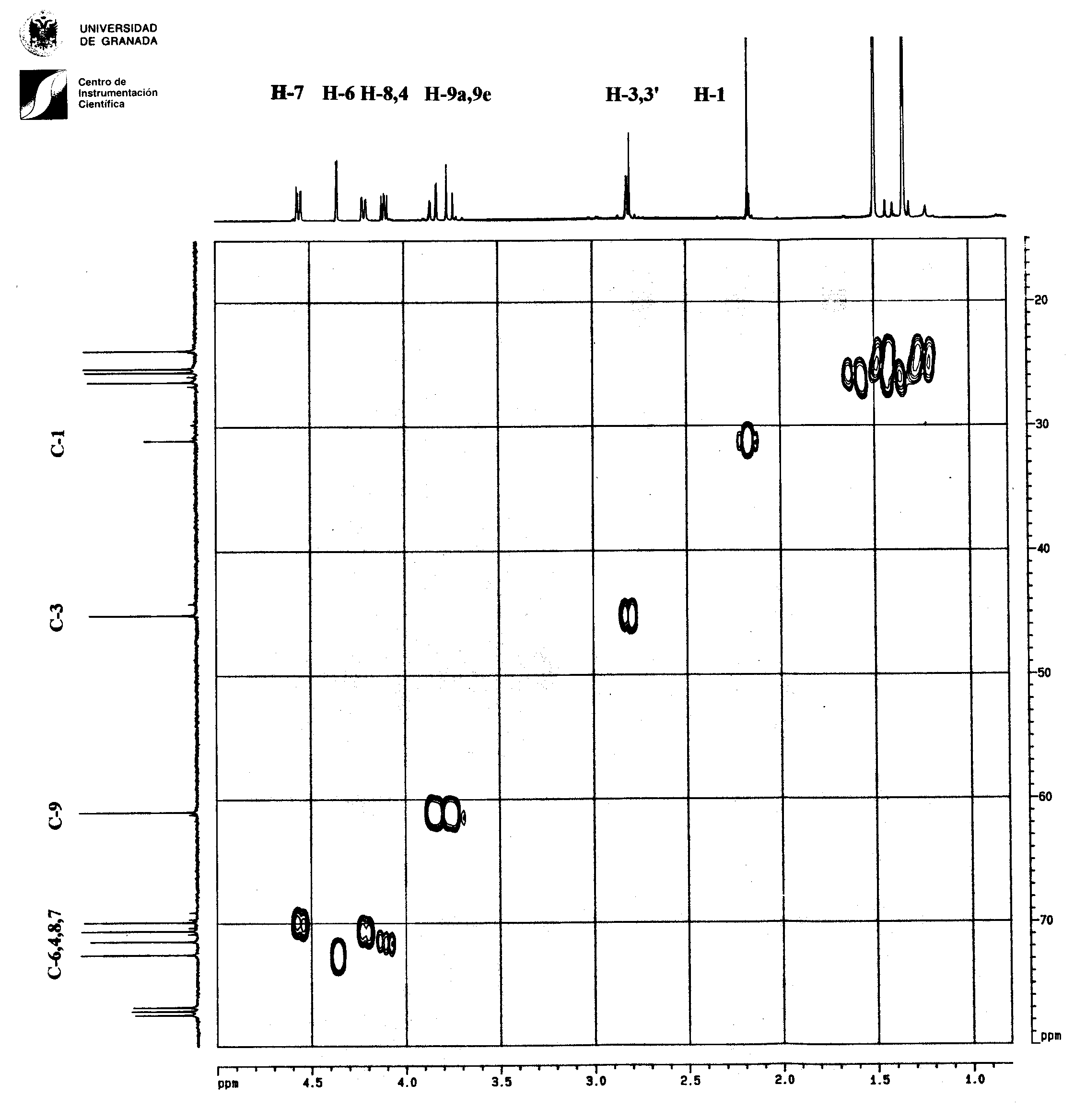
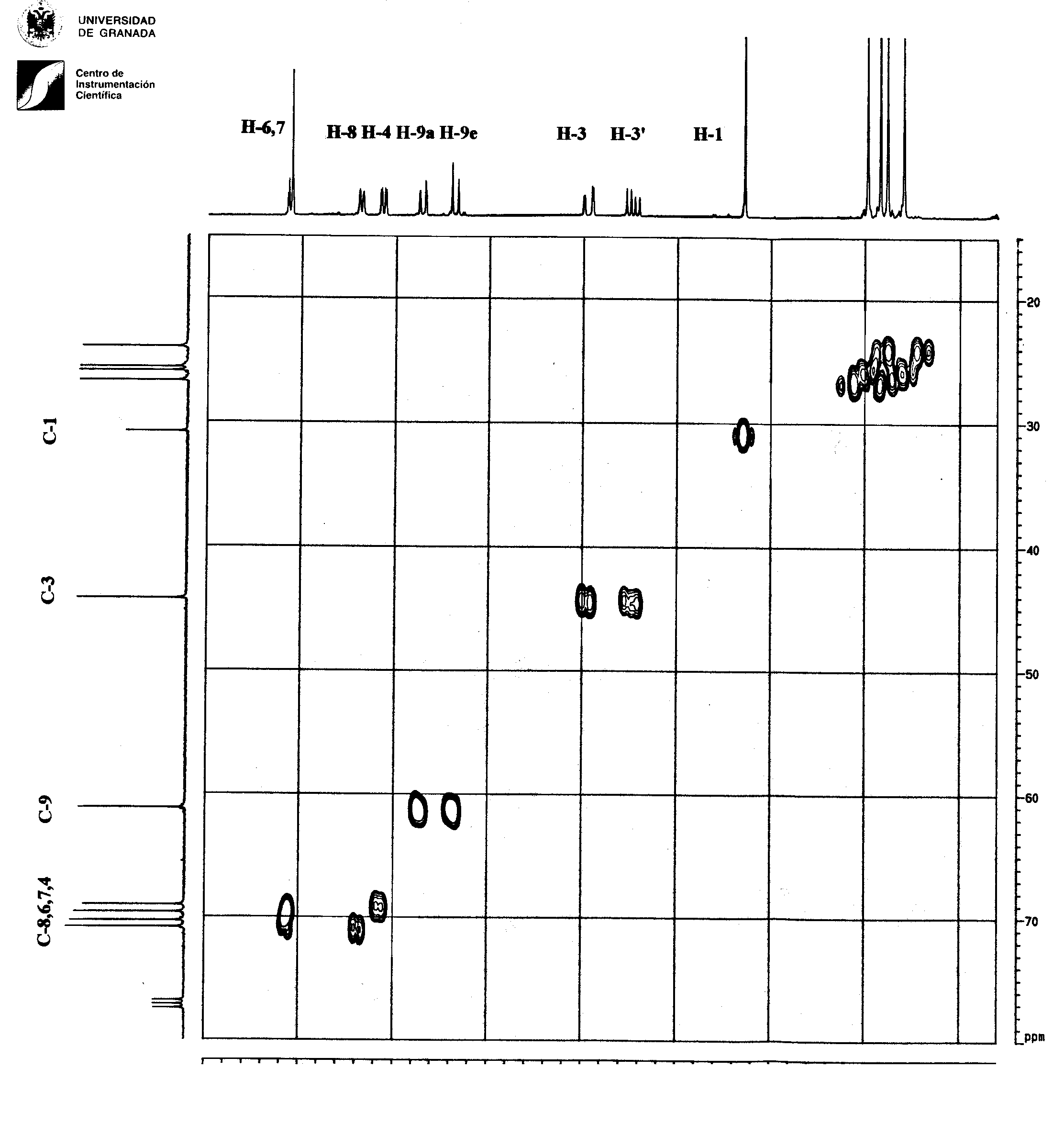
Figure1. 2D
13C-1H heteronuclear shift-correlation spectra of
compounds 3 (4R) and 4 (4S).
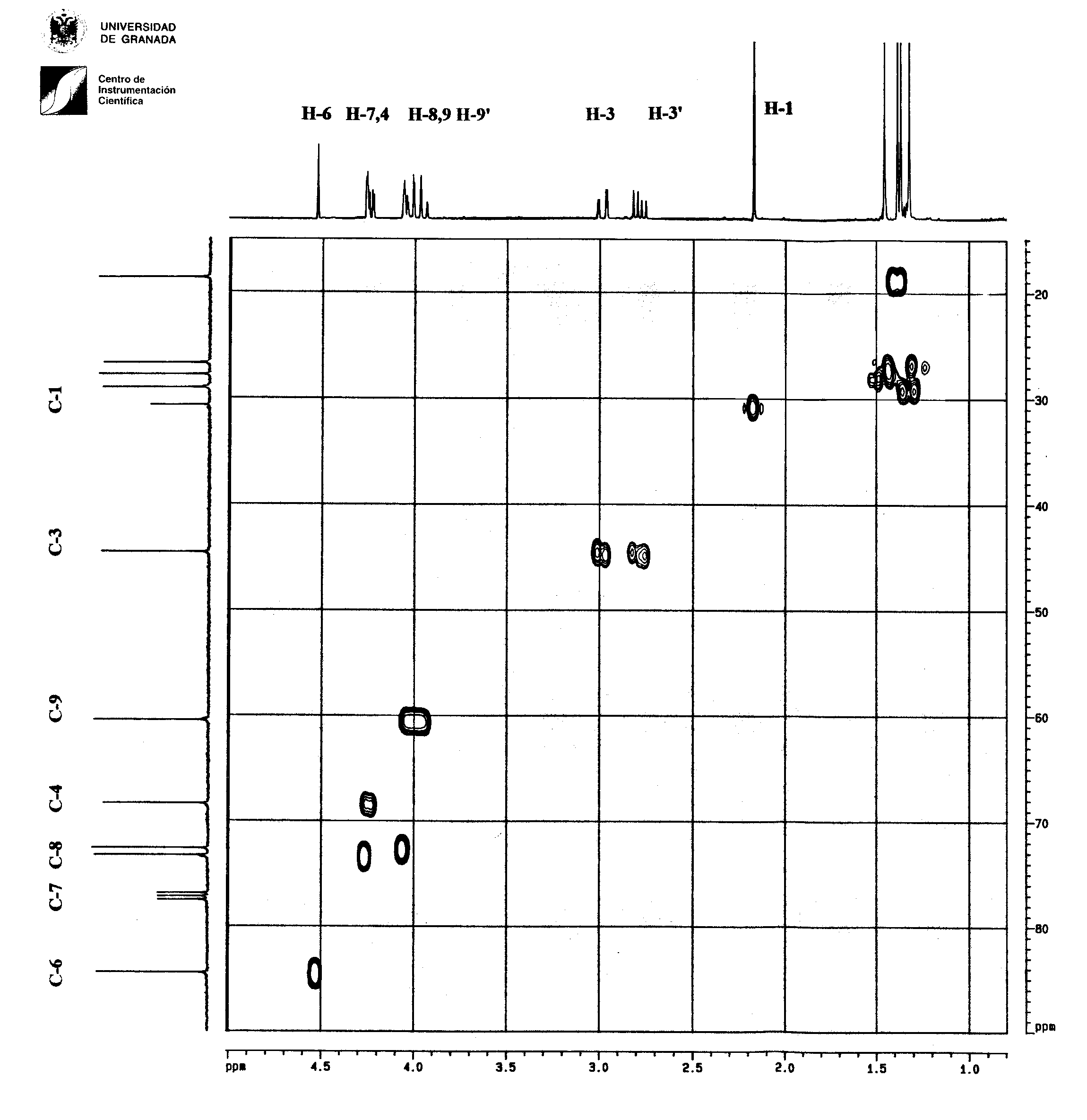
Figure 2. 2D 13C-1H heteronuclear shift-correlation spectrum of compound 8 (4R).
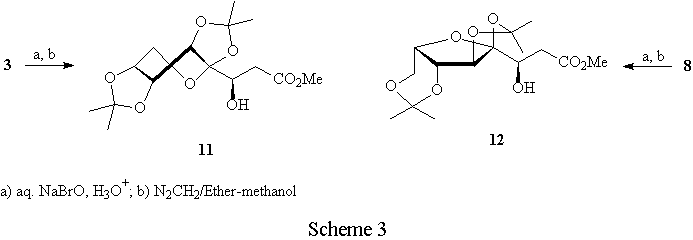
On the other hand, GLC analysis of the degradation products of 3
(11) and 8 (12) (see Scheme 3), allowed its identification
by comparison of the respective RT with those showed by authentic
samples of methyl 2-deoxy-4,5:6,7-di-O-isopropylidene-b-d-manno-oct-4-ulo-4,8-pyranosonate (11) and
methyl 2-deoxy-4,5:6,8-di-O-isopropylidene-a-l-gulo-oct-4-ulo-4,7-furanosonate (12)
previously reported by our group.[3d]
Table 2. 1H NMR chemical shifts (d ) and J (Hz) values for compound 3, 4, 8, and 10.
|
|
H-1 |
|
|
|
|
|
|
|
|
|
|
|
|
J3,4 2.7 J3,3’ 17.7 |
J3’,4 9.1 |
|
|
J7,8 7.7 |
J8,9 1.7 J9,9’ 13 |
|
1.47 1.43 1.35 | |
|
|
|
|
J3,4 5.4 J3’,4 6.8 |
J6,7 2.5 |
J7,8 8 |
|
J8,9 2 J9,9’ 13.1 |
J8,9’ 0.5 |
1.48 1.34 1.33 | |
|
|
|
J3,4 2.9 J3,3’ 17.5 |
J3’,4 9.2 |
|
|
J7,8 2.1 |
|
J8,9 2.2 |
J9,9’ 12.9 |
1.39 1.37 1.32 |
|
|
|
J3,4 16 |
|
|
|
J8,9 1.6 |
|
1.42 1.35 1.34 | ||
Compound 5 showed the same physical and spectroscopic data previously reported[5]. Compound 10 was indentified by comparison with an authentic sample prepared by Wittig’s reaction between 7 and 1-phosphoranylidene-2-propanone, where a small quantity of its Z-isomer was also isolated.
Table 3. 13C NMR chemical shifts (d ) for compound 3, 4, 8, and 10.
|
|
|
|
|
|
|
|
|
|
|
|
|
|
|
|
|
|
|
|
|
|
|
|
108.69 |
25.90 25.59 23.95 |
|
|
|
|
|
|
|
|
|
|
|
108.60 |
25.52 25.23 23.78 |
|
|
|
|
|
|
|
|
|
|
|
97.40 |
27.73 26.64 18.59 |
|
|
|
|
|
|
|
|
|
|
|
97.53 |
27.08 66.23 18.66 |
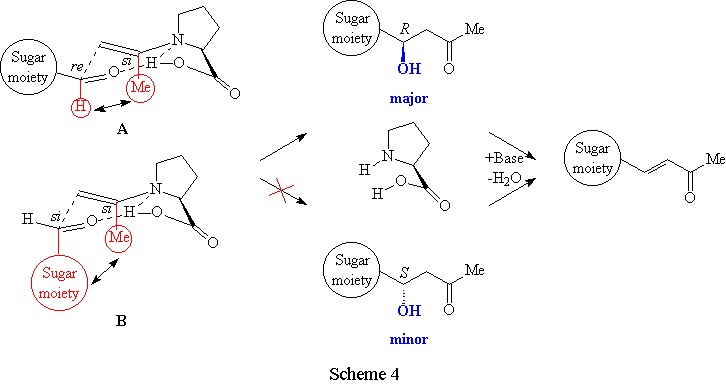
The above stereochemical results can be justified (see Scheme 4) according to literature,[2b,c] considering the free metal version of the Zimmerman-Traxler type transition states A and B,[6] where the former (ul-topicity) is lacking in the 1,3-diaxial interaction between the bulky sugar-moiety and the methyl group of the l-proline enamine intermediate and hence is sterically less hindered and clearly favoured respect to B (lk-topicity). In addition, those findings obtained with d-proline could be justified on the basis of as a typical case of catalyst-aldehyde chirality mismatched process.
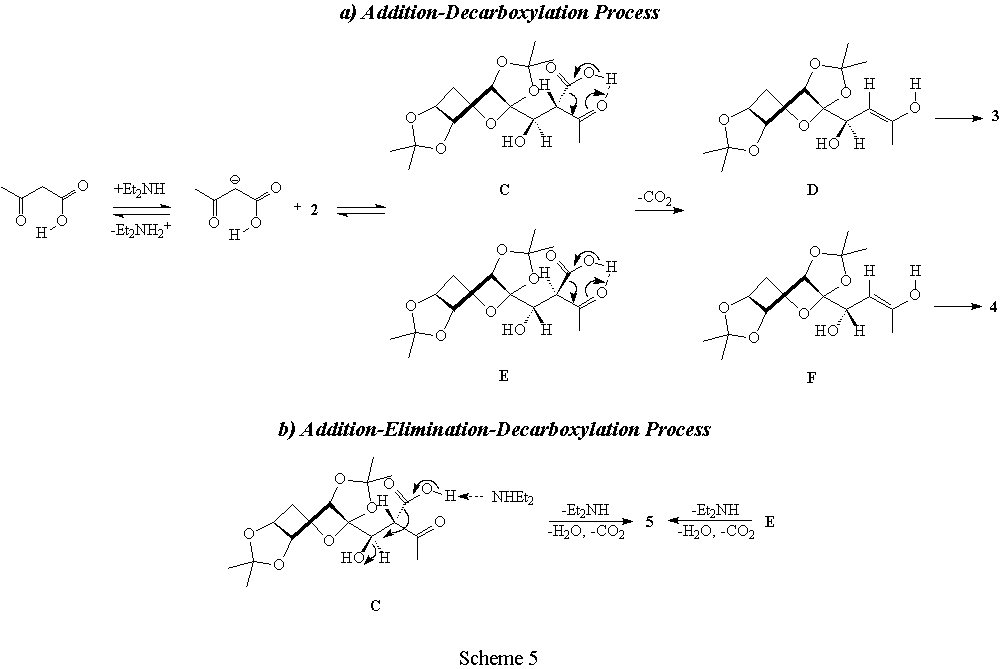
In the same way, merits mention the high chemo and stereoselectivity found in the Knoevenagel reaction of 2, and in some how of 7, with acetoacetic acid (see Table 1 entries 5 and 6), which was quite similar to the best, obtained with l-proline. Explanation can be see in Scheme 5, where two (C and E) of all four possible intermediate adducts are represented. According to the literature[3c] and depending on the reaction conditions, adducts could progress in two different ways. Under the actual conditions used in this work (non basic solvent), the favoured decarboxylation reaction of C and E would afford the (R)- (3) and (S)-b -hydroxyketone (4), respectively, whereas by an elimination-decarboxylation reaction, both C and E would produce the (E)-a ,b -enone (5). On the basis of data included in Table 1, adduct C must be the main responsible for the formation of 3, being the scarcely formed E responsible for the formation of 5. A similar reasoning can be made for the rest of the intermediate adducts and for l-sorbose aldehyde 7.
Conclusions
On the basis of the above results, we can conclude that both, l-proline
catalysed Claisen-Schmidt aldol condensation and Knoevenagel reaction, are very
appropriated ways for the –CHO ® -CHOH-CH2-CO-CH3 stereocontrolled
transformation in polyfunctionalised complex molecules.
Acknowledgements
The authors are deeply grateful to Ministerio de Educación y Cultura (Spain) for finantial support (Project PB98-1357) and for a grant (F. Franco).
References
1. Wong, C. H.; Whitesides, G. M., Enzymes in Synthetic Organic Chemistry; Elsevier Science Ltd.: Oxford, 1994.
2. (a) Gröger, H; Wilken, J., Angew. Chem. Int. Ed., 2001, 40, 529-532; (b) List, B.; Lerner, R. A.; Barbas III, C. F., J. Am. Chem. Soc., 2000, 122, 2395-2396; (c) Notz, W.; List, B., J. Am. Chem.Soc., 2000, 122, 7386-7387.
3. For Knoevenagel reaction, see: (a) López Aparicio, F. J.; Gómez Guillén, M.; Izquierdo Cubero, I., An. Quim., 1976, 72, 938-945; (b) ibid., 1978, 73, 1168-1176; (c) López Aparicio, F. J.; Izquierdo Cubero, I.; Portal Olea, M. D., Carbohydr. Res., 1982, 103, 158-164. For Reformatsky reaction, see: (d) Izquierdo, I.; Plaza, M.-T.; Robles, R.; Mota, A. J., Tetrahedron: Asymmetry, 1997, 8, 2597-2606.
4. Costanzo, M. J.; Jaroskova, L.; Gauthier, D. A.; Maryanoff, B. E., Tetrahedron: Asymmetry, 1999, 10, 689-703, and references therein.
5. Izquierdo Cubero, I.; Plaza López-Espinosa, M.-T.; Richardson, A. C., J. Chem. Ecol., 1993, 19, 1265-1283.
6. Zimmerman, H. E.; Traxler, M. D., J. Am. Chem. Soc., 1957, 79, 1920-1923.